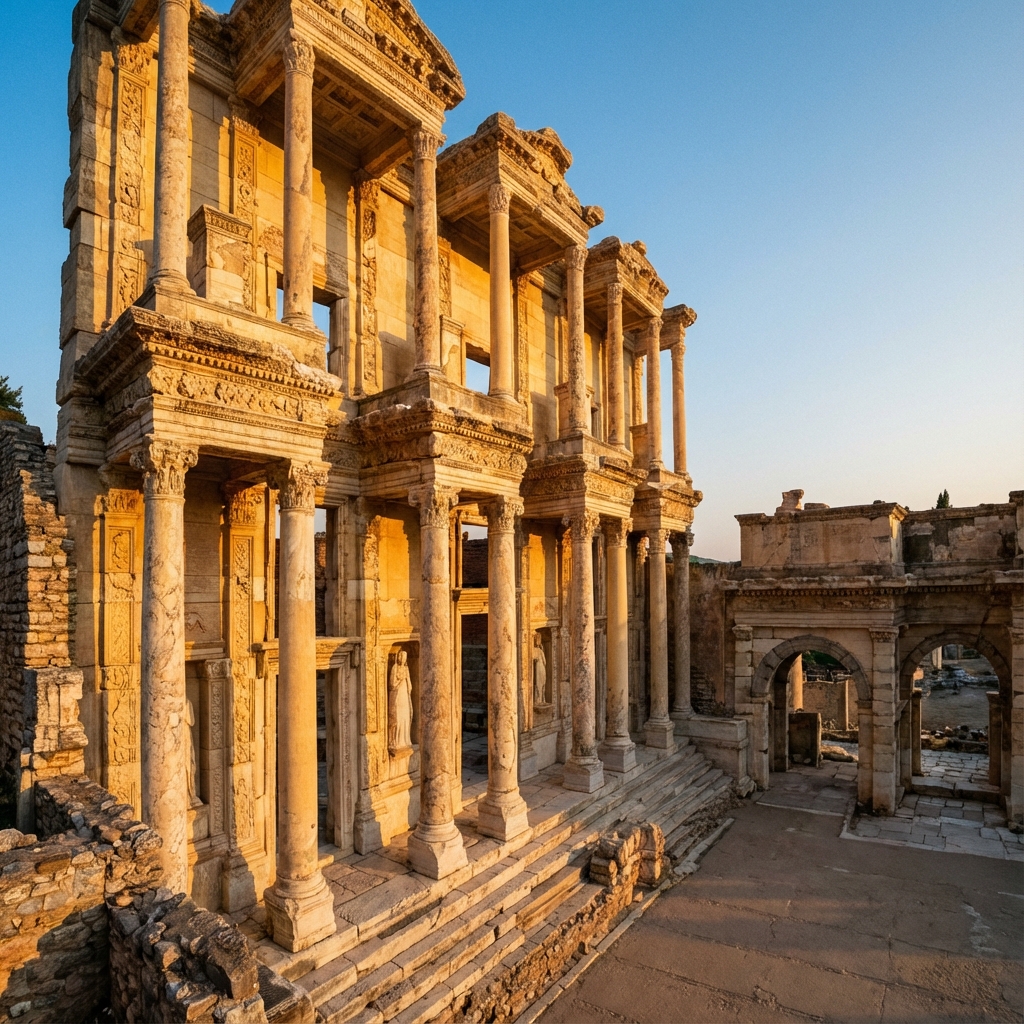
Walking Through the Echoes of Antiquity
Ephesus was once the second largest city in the Roman Empire, boasting a population of 250,000. Today, it stands as one of the most well-preserved ancient cities in the world.
Must-See
- Library of Celsus
- Great Theatre
- Temple of Hadrian
- Terrace Houses
- Marble Road
- Agora of Ephesus
Visiting Note
Allow at least 4 hours for a full exploration. Sunset visits offer the best light for photography at the Library. Buy tickets online to skip the queues.
As you walk down the Marble Road, you follow in the footsteps of Cleopatra, Mark Antony, and the Apostles. The sheer scale of the ruins is overwhelming — architecture that was designed to intimidate and inspire.
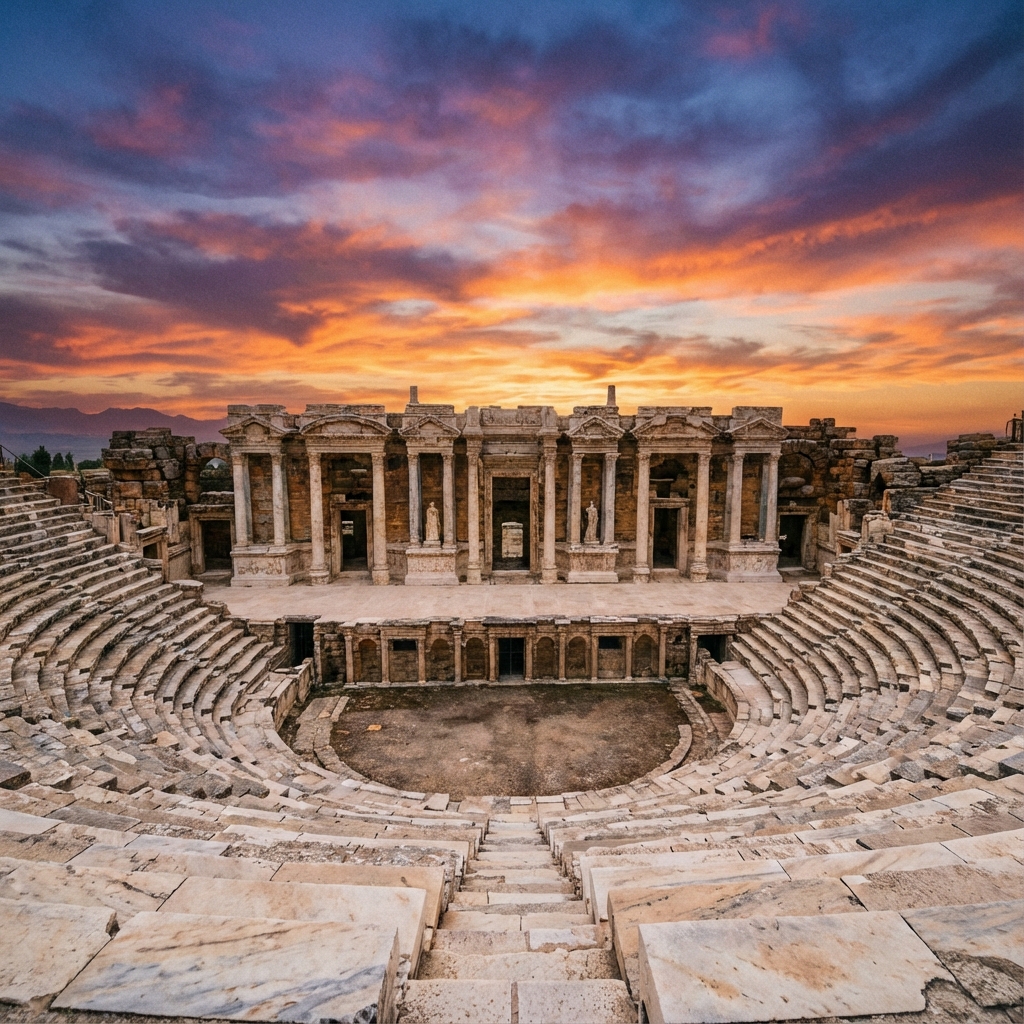
The Heart of the City
From the Agora to the Odeon, the city reflects a sophisticated urban planning that included public baths, latrines with marble seating, and a complex sewage system that was centuries ahead of its time.
The Library of Celsus
The Library of Celsus is the most recognisable monument in Ephesus. Built around 117–120 CE as a funerary monument for Tiberius Julius Celsus Polemaeanus, it once housed 12,000 scrolls. Its double-walled construction protected the scrolls from temperature and humidity — an engineering marvel of the ancient world.
The Great Theatre
Carved into the slope of Mount Pion, the Great Theatre could seat 25,000 spectators. It is here that the Apostle Paul addressed the Ephesians, an event described in the Acts of the Apostles. The theatre's acoustics remain extraordinary to this day.